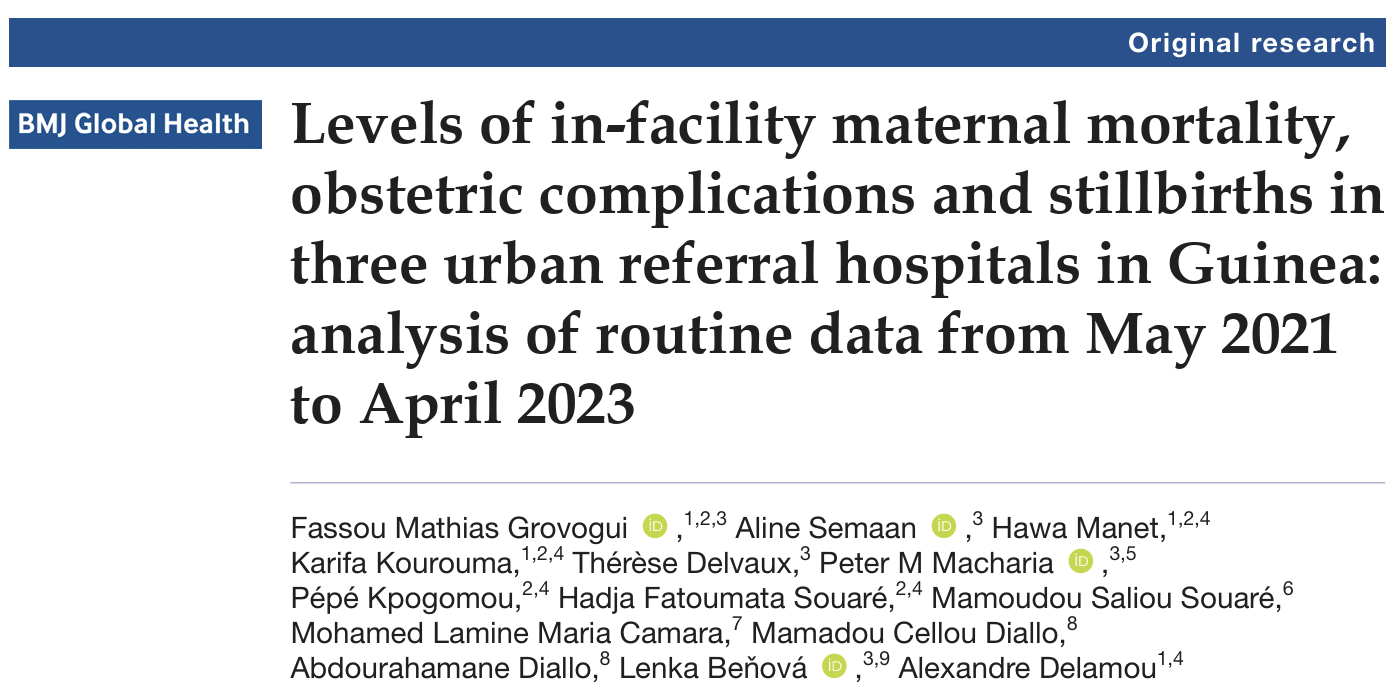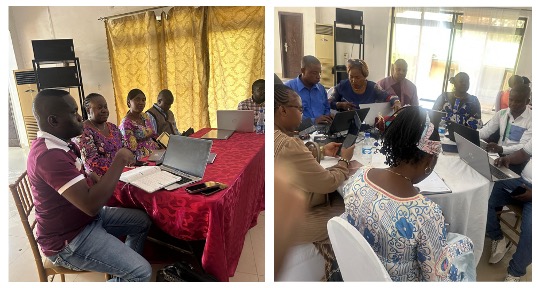
The Haut-Katanga Provincial Health Division (DPS HK) organized its 2025 semi-annual performance review, followed by 2026 operational planning, from October 28 to November 2, 2025, in the Kalubwe Lodge hall. The meeting brought together the Head of Division himself; the Heads of Offices (CB) of the DPS HK; the Provincial Health Inspectorate (IPS); the Permanent Multipurpose Supervisors (EPP) of the health zones; the Chief Medical Officers of the Health Zones (MCZS) and their managing administrators (AG); Technical and Financial Partners (PTF); civil society health representatives; and representatives from specialized programs working in the province. For the first time, the UrbanMat project participated in this semi-annual review, thus strengthening its active partnership with the DPS HK.
The work took place over 4 days and included:
- Plenary presentations on the province's performance for the year 2024 and the first half of 2025; the presentation of the population of the Haut-Katanga DPS and the problem of traffic accidents in Lubumbashi.
- Working groups on the analysis of performance indicators by Health Zone (HZ) and level of implementation of the 2025 Operational Action Plan (OAP) (27 Working Groups based on the 27 HZs of the DPS HK).
- Presentation sessions for each ZS (Evaluation + PAO2026) and discussions.
- A guidance session on planning for 2026, the next steps in the process and a summary of recommendations.
A first significant collective participation: Our health zone maps were distributed and used!
The participation of the UrbanMat team in this event is part of its commitment to supporting urban health governance in the city of Lubumbashi, and to strengthening integrated intervention planning.
This was a unique opportunity for our multidisciplinary team to join forces with all provincial health stakeholders.

The electronic version of the health zone maps we produced was distributed and used to support the analysis of health zone performance and to guide the planning of priority actions. These maps provided a clear visualization of the distribution of healthcare facilities, coverage areas, and gaps in access to essential services. Their use strengthened the integration of the UrbanMat project in to the provincial health planning process.
Our participation is an important step towards more inclusive and locally based planning.
Rich and constructive exchanges
During the meeting, members of the UrbanMat team participated in problem analysis groups for each health zone. This allowed us to identify the causes of these problems, corrective actions to be taken, those responsible, resources to be mobilized, funding sources, objectively verifiable indicators, verification methods, and internal and external stakeholders. To improve population health and health indicators, concrete action points for implementation during 2026, as well as performance indicators for each health zone, were developed.
UrbanMat team members moderate a discussion session
During this semi-annual review, the UrbanMat project team had the honor of moderating the final discussion session focusing on the 2026 planning guidelines, the next steps in the process, and a summary of the recommendations from the various working groups before the official closing of the review.
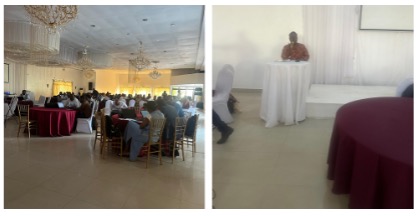
This session fostered a constructive dialogue among participants, focusing on the challenges and prospects related to improving health service coverage, health zone performance indicators, and operational planning for 2026. The moderation provided by our team promoted a participatory and solution-oriented atmosphere, thus contributing to enriching the review's conclusions and recommendations.
Impact and outlook
This meeting was akey step in consolidating the outcomes of the discussions, harmonizing health zone priorities, and strengthening planning coherence at the provincial level. Thanks to participatory moderation by our team, the session ensured clarity of commitments, clarified implementation responsibilities, and concluded the review on a constructive and collaborative note from the Provincial Health Division Chief.
In conclusion
Our participation in this 2025 semi-annual review and the 2026 operational planning marks an important milestone that has strengthened the visibility and recognition of the UrbanMat project within provincial health authorities. We conclude this quarterly review determined to finalize and formalize the memorandum of understanding between the UNILU School of Public Health and the Haut-Katanga Provincial Health Directorate, in order to accelerate our collaboration.
La Division Provinciale de la Santé du Haut-Katanga (DPS HK) a organisé, du 28 octobre au 02 novembre 2025, dans la grande salle Kalubwe Lodge; la revue semestrielle des performances 2025 suivie des travaux de planification opérationnelle 2026. Ces assises ont réuni le Chef de Division lui-même; les Chefs de Bureaux (CB) de la DPS HK, l’Inspection Provinciale de la Santé (IPS), les Encadreurs Polyvalents Permanents (EPP) des zones de santé, les Médecins Chefs de Zones de santé (MCZS) et leurs administrateurs gestionnaires (AG), les Partenaires Techniques et Financiers (PTF), la société civile santé, ainsi que les programmes spécialisés œuvrant dans la province. Et pour la première fois, le projet UrbanMat a participé à cette revue semestrielle, et renforce ainsi son partenariat actif avec la DPS HK.
Les travaux se sont déroulés sur 4 jours, alternant :
- Des présentations plénières sur les performances de la province pour l‘année 2024 et le premier semestre 2025 ; la présentation de la population de la DPS Haut-Katanga et la problématique des accidents de circulation à Lubumbashi.
- Des groupes de travail sur l’analyse des indicateurs de performances par Zone de santé (ZS) et niveau de mise en œuvre du Plan d’Action Opérationnel (PAO) 2025 (27 Groupes de travail en fonction des 27 ZS de la DPS HK).
- Des sessions de présentations de chaque ZS (Evaluation +PAO 2026) et des échanges.
- Une session d’orientations sur la planification 2026, les prochaines étapes du processus et la synthèse des recommandations.
Une première participation collective marquante : Nos cartes sanitaires ont été diffusées et utilisées !
La participation de l’équipe de UrbanMat à cet événement s’inscrit dans son engagement à appuyer la gouvernance sanitaire urbaine dans la ville de Lubumbashi, et à renforcer la planification intégrée des interventions.
C’était une occasion unique pour notre équipe multidisciplinaire de se joindre à l’ensemble des acteurs provinciaux de la santé.
La version électronique des cartes sanitaires que nous avons produites a été diffusée et utilisée pour appuyer l’analyse des performances des ZS, et orienter la planification des actions prioritaires. Ces cartes ont permis de visualiser clairement la répartition des structures de soins, les zones de couverture, ainsi que les écarts d’accès aux services essentiels. Leur utilisation a renforcé l’intégration du projet UrbanMat dans le processus de planification sanitaire provinciale.
Notre participation estun pas important vers une planification plus inclusive et fondée sur des données locales.
Des échanges riches et constructifs
Durant les travaux, les membres du projet UrbanMat ont pris part aux groupes d’analyse des problèmes par zone de santé. Nous avons ainsi contribué à identifier les causes de ces problèmes, les actions correctrices à mener, les responsables, les ressources à mobiliser, les sources de financement, les indicateurs objectivement vérifiables, les sources de vérification, et les parties prenantes internes ou externes. Pour améliorer la santé des populations, ainsi que les indicateurs de santé, des points d’actions concrètes à mettre en œuvre durant l’année 2026, ainsi que les indicateurs de performances par ZS ont été élaborés.
UrbanMat modère une séance d’échanges
Au cours de cette revue semestrielle, l’équipe du projet UrbanMat a eu l’honneur de modérer la dernière séance d’échanges portant sur les orientations sur la planification 2026, les prochaines étapes du processus, la synthèse des recommandations issues des différents groupes de travail avant la clôture officielle de la revue.
Cette session a permis de susciter un dialogue constructif entre les participants, autour des défis et des perspectives liés à l’amélioration de la couverture des services de santé, les indicateurs de performance des ZS et la planification opérationnelle 2026. La modération assurée par notre équipe a favorisé un climat participatif et orienté vers des solutions concrètes, contribuant ainsi à enrichir les conclusions et recommandations de la revue.
Retombées et perspectives
Ce moment a constitué une étape clé pour consolider les résultats des discussions, harmoniser les priorités des ZS et renforcer la cohérence de la planification au niveau provincial. Grâce à une modération participative de notre équipe, la séance a permis d’assurer la clarté des engagements, de préciser les responsabilités de mise en œuvre et de clôturer la revue sur une note constructive et collaborative du Chef de Division provinciale de la santé.
En conclusion
Notre participation à cette revue semestrielle 2025 et la planification opérationnelle 2026 marque une étape importante qui a permis un renforcement de la visibilité et de la reconnaissance du projet UrbanMat au sein des instances provinciales desanté. Nous clôturons cette revue trimestrielle avec la détermination de finaliser et de formaliser le mémorandum d’entente entre l’ÉSP UNILU et la DPS Haut-Katanga, afin d’accélérer notre collaboration.